
Dracula facts for kids

First edition cloth cover (1897)
|
|
| Author | Bram Stoker |
|---|---|
| Country | United Kingdom |
| Language | English |
| Genre |
|
| Publisher | Archibald Constable and Company (UK) |
|
Publication date
|
May 1897 |
| OCLC | 1447002 |

Dracula is a famous and spooky novel written by Irish author Bram Stoker in 1897. It's a Gothic horror story, which means it's full of mystery, suspense, and supernatural elements. The story is told through letters, diary entries, and newspaper clippings, making it feel very real. It begins with a young English lawyer named Jonathan Harker traveling to a mysterious castle in Transylvania. He is there to help a powerful nobleman, Count Dracula, buy a house in London. Soon, Jonathan discovers that Count Dracula is actually a terrifying vampire! Dracula then travels to England, bringing his dark influence to the town of Whitby. Jonathan Harker teams up with a brave group, including the wise Professor Abraham Van Helsing, to hunt down and defeat the Count.
The novel was mostly written in the 1890s. Stoker did a lot of research, looking into folklore and history. Many people have wondered who inspired the character of Dracula. Some thought it was a real prince named Vlad the Impaler or Countess Elizabeth Báthory. However, newer studies suggest this might not be true. Stoker found the name "Dracula" in a history book and liked it because he thought it meant 'devil' in Romanian.
When Dracula was first published in May 1897, some people loved its scary atmosphere. Others felt it had too much horror. Over time, Dracula became known as a very important work of Gothic fiction. Today, experts often study the book to understand how it shows ideas about society, beliefs, and people's roles during the Victorian era.
Dracula is one of the most famous books in English literature. It is often called the most important story about vampires. In the mid-1900s, it was discovered that Stoker had made a mistake with the novel's copyright in the United States. This meant the story and its characters became free for anyone to use. Because of this, Dracula has been adapted into many movies, TV shows, and plays. Count Dracula has greatly shaped how people imagine vampires. He has appeared in over 700 different ways in media, making him the most portrayed literary character ever, according to the Guinness Book of World Records.
Contents
The Story of Dracula
The Mysterious Journey to Dracula's Castle
The story starts with Jonathan Harker, a young English lawyer, visiting Count Dracula at his ancient castle in the Carpathian Mountains. Jonathan is there to help the Count buy a new home in London. But strange things begin to happen. Jonathan explores the castle and meets three mysterious women. He soon realizes that Dracula is not just a nobleman, but a powerful vampire! Jonathan manages to escape the castle and eventually recovers in a hospital.
Meanwhile, Dracula travels to England on a ship called the Demeter. He brings with him boxes of earth from his homeland. During the journey, the ship's crew mysteriously disappears one by one. When the ship finally reaches the English town of Whitby, only the dead captain is found, tied to the ship's steering wheel. A large dog is seen jumping ashore, hinting at Dracula's arrival.
Strange Illnesses and a Wise Professor
Back in England, Jonathan's fiancée, Mina Murray (who later becomes Mina Harker), is with her best friend, Lucy Westenra. Lucy is a popular young woman who has received marriage proposals from three friends: Dr. John Seward, Quincey Morris, and Arthur Holmwood. She chooses to marry Arthur, but they all remain close friends.
While Mina and Lucy are on holiday in Whitby, Lucy starts to act strangely, often sleepwalking. She doesn't know that Count Dracula is secretly influencing her. Mina soon hears about Jonathan's illness and goes to Budapest to care for him. Lucy becomes very sick, losing a lot of blood. Dr. Seward calls his old teacher, the brilliant Professor Abraham Van Helsing, to help. Van Helsing quickly understands what is happening, but he keeps his suspicions secret for a while.
The Mystery of Lucy's Transformation
Professor Van Helsing tries to save Lucy. He gives her fresh blood and fills her room with garlic flowers, which are believed to ward off evil. Sadly, Lucy's mother removes the garlic, not knowing its importance. One night, a wolf attacks, and Lucy's mother passes away from shock. Lucy herself soon dies.
After Lucy's funeral, strange reports appear in newspapers about a "bloofer lady" (a beautiful lady) who is bothering children at night. Van Helsing realizes with horror that Lucy has become a vampire! He, Dr. Seward, Quincey Morris, and Arthur Holmwood go to her tomb. They perform a sad but necessary ritual to free her spirit from the vampiric curse. Jonathan Harker and his new wife, Mina, return and join the group, determined to stop Dracula.
Hunting Dracula's Secrets
The brave group gathers at Dr. Seward's asylum. Van Helsing explains that Dracula's power comes from the boxes of earth he brought from his castle. They must find and destroy these boxes to weaken him. Dracula uses one of Dr. Seward's patients, a man named Renfield, to help him enter the asylum.
Dracula secretly attacks Mina several times, sharing his dark power with her. This creates a strange connection between them. The group discovers that Dracula has hidden his boxes of earth all over London. They work quickly to find and destroy most of them. However, Dracula escapes, taking his last box of earth and fleeing back to his castle in Transylvania. Using hypnosis, Van Helsing uses Mina's special connection to Dracula to track his movements, and the group follows, guided by her.
The Final Confrontation
In Galatz, Romania, the hunters split up. Van Helsing and Mina go to Dracula's castle, where the professor destroys the vampire women who live there. Jonathan Harker and Arthur Holmwood chase Dracula's boat on the river. Quincey Morris and Dr. Seward follow them on land.
Dracula's last box of earth is loaded onto a wagon by Romani men. The hunters attack and defeat the Romani. Jonathan Harker strikes Dracula, and Quincey Morris stabs him in the heart. Dracula crumbles into dust, and Mina is freed from her vampiric curse. Sadly, Morris is badly hurt in the fight and dies peacefully, knowing Mina is safe. Seven years later, Jonathan Harker writes that he and Mina have a son, named Quincey, in honor of their brave friend.
About the Author
Bram Stoker was born in Clontarf, Dublin, Ireland, on November 8, 1842. He was often sick as a child and was taught at home. Later, he went to Trinity College Dublin. In the 1870s, Stoker started writing reviews for plays. He became good friends with a famous actor named Henry Irving. In 1878, Irving offered Stoker a job as the business manager for the Lyceum Theatre in London, which Stoker accepted. He married Florence Balcombe that same year. This job helped Stoker meet many important people in Victorian London.
Stoker wrote many books, including romance and adventure stories. By the time he passed away in 1912, he had published 18 books. Dracula was his seventh book. Even though Dracula is now super famous, it didn't make Stoker a lot of money or fame during his lifetime.
What Inspired Dracula?
.jpg)
Vampire stories existed long before Stoker wrote Dracula. Stoker used some ideas from old vampire folklore, like vampires not liking garlic and being killed by a stake. But he also invented new things, such as vampires needing an invitation to enter a home, sleeping on earth from their homeland, and not having a reflection in mirrors. In the novel, sunlight doesn't kill Dracula, but it does make him weaker. The idea that sunlight destroys vampires became popular later, especially after the movie Nosferatu (1922).
Many people believe that the famous actor Henry Irving partly inspired Count Dracula. Scholars note that the Count's tall, thin look and sharp nose match Irving's appearance. Stoker himself praised Irving's acting, describing him as giving "a wonderful impression of a dead man fictitiously alive."
Some historical figures have been suggested as inspirations for Count Dracula. For example, Vlad the Impaler, a prince from Wallachia, was known for his cruelty. However, there isn't much proof that Stoker used Vlad's story directly. Another idea was that the crimes of Countess Elizabeth Báthory inspired Stoker, but again, there's no strong evidence for this in Stoker's notes. Stoker found the name "Dracula" in a history book and thought it meant 'devil', which he liked for his villain.
How the Book Was Written

Before writing Dracula, Bram Stoker did a lot of research. He gathered over 100 pages of notes, including ideas for chapters and plot outlines. He did some research at a library in Whitby and most of it at the London Library. Stoker's notes show that he always planned for the story to be told through letters and diaries. He also considered other ideas, like a German professor fighting a "Count Wampyr."
Stoker said it took him about three years to write the novel. He likely wrote most of it during his summer holidays in Cruden Bay, Scotland, between 1893 and 1896. He worked on the book in his spare time while managing Henry Irving's theatre.
Famous Adaptations

Dracula has been adapted into countless movies, TV shows, video games, and plays. Experts say the novel and its characters have appeared in over 700 films and TV shows. There are nearly 1000 more appearances in comic books and on stage. In 2015, the Guinness Book of World Records named Dracula the most portrayed literary character ever!
One of the earliest films to feature Dracula was a Hungarian silent movie called Drakula halála (The Death of Dracula). Another famous early adaptation was F. W. Murnau's Nosferatu (1922). This film changed the story quite a bit. Bram Stoker's widow, Florence, even took legal action against the studio behind Nosferatu because it was made without permission.
Over the years, how Dracula looks has changed a lot. Early stage shows and films like the 1931 movie with Béla Lugosi and the 1958 film with Christopher Lee helped create his iconic look. Lee's portrayal made fangs popular on screen. Later, Gary Oldman's Dracula in Bram Stoker's Dracula (1992) gave the character a Romanian accent and long hair, which became a new standard.
Here are some of the most well-known movies based on Dracula:
- 1922, Nosferatu, eine Symphonie des Grauens (Nosferatu, a Symphony of Horror). This was the first movie based on the novel. It was directed by F. W. Murnau. Max Schreck played the vampire, Count Orlok. The director couldn't get permission from Stoker's wife to use the story, so she tried to have many copies of the movie destroyed after it came out.
- 1931, Dracula. This horror movie was directed by Tod Browning and starred Béla Lugosi as Dracula.
- 1958, Horror of Dracula. This horror film starred Christopher Lee as Count Dracula.
- 1979, Dracula. Another horror movie, starring Frank Langella as Dracula.
- 1979, Love at First Bite. This was a comedy movie, starring George Hamilton as Count Vladimir Dracula.
- 1992, Bram Stoker's Dracula. This horror film was directed by Francis Ford Coppola and starred Gary Oldman as Dracula.
- Dracula: Dead and Loving it. This was a comedy movie directed by Mel Brooks and starring Leslie Nielsen as Count Dracula.
- Van Helsing is a 2004 movie. It stars Hugh Jackman as the main character, Gabriel Van Helsing, and Richard Boxburgh as Count Vladislaus Dracula.
- 2014, Dracula Untold, directed by Gary Shore.
How Dracula Changed Vampire Stories

Dracula is one of the most famous and influential books in English literature. Even though it wasn't the very first vampire story, it completely changed how people think about vampires. For many, Count Dracula is the first character that comes to mind when they hear the word "vampire." The book brought together old folklore, legends, and Gothic storytelling in a powerful way.
The novel deeply shaped our modern understanding of vampires. This includes their strengths, weaknesses, and other traits. For example, bats were linked to vampires before Dracula, but Stoker made the connection stronger by letting Dracula transform into a bat. This idea was quickly used in movies for special effects. Many of Dracula's characteristics, like his dislike of garlic and crucifixes, have become common in vampire stories that came after Stoker's novel.
In the 1930s, Universal Studios found out that Stoker had not properly copyrighted Dracula in the United States. This meant the novel entered the public domain in the United States much earlier than expected. This mistake prevented Stoker's family from earning royalties from adaptations. However, it also allowed many writers and filmmakers to use the character of Count Dracula without paying a fee. This helped the story become even more popular and endure for generations.
Images for kids
-
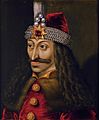
Vlad III, also known as Vlad the Impaler
-
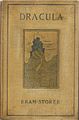
The first American edition of Dracula from 1899, published by Doubleday & McClure
-
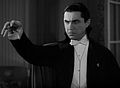
Bela Lugosi as Dracula in the 1931 movie


See also
 In Spanish: Drácula para niños
